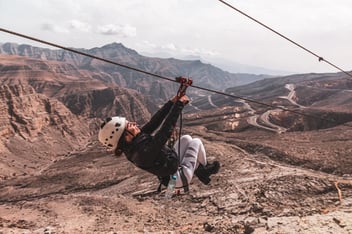
The Hajar range surrounding Jebel Jais supports far more than engineered roads and viewing platforms. Wildlife in the Jebel Jais Mountains exists within a desert and highland environment shaped by rock, brief seasonal rain, and significant shifts in temperature.
At first glance, the terrain can seem sparse. Spend a little time along the slopes or in the wadis and the presence of life becomes clearer; from small mammals and birds to reptiles and resilient plant species, all adapted to these conditions.
The Ecology of Jebel Jais
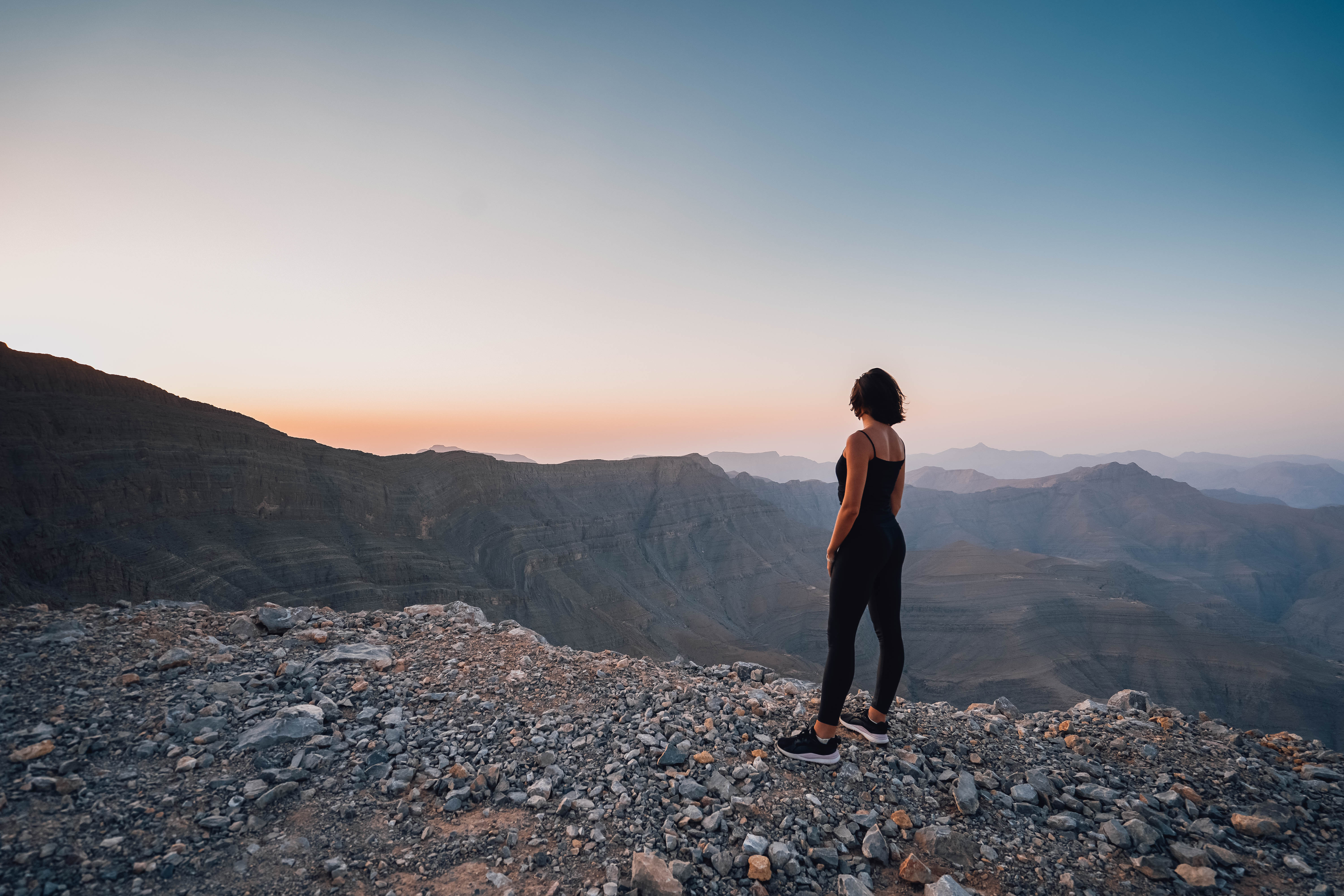
The Jebel Jais ecosystem is defined by exposed ridgelines, gravel plains, and narrow wadis that cut through the mountains. Vegetation is scattered and every species that persists here has adapted to limited water and wide temperature variation.
During a recent period when parts of the mountain were temporarily closed, following severe weather, staff began noticing something unexpected. With fewer vehicles on the road, wildlife activity became easier to detect across certain areas.
Animal tracks, sightings, and movement patterns suggested that many species had always been present, simply remaining out of view.
Much of that life remains inconspicuous, emerging at dawn, dusk, or after dark when the mountain is calmer. Here are some wildlife species that have been spotted in the area..
Mammals of the Mountain Slopes
Large mammals are rarely seen during the day, but smaller predators are very much part of the mountain’s daily life.
Arabian Red Fox
The Arabian Red Fox (Arabian fox) is one of the most adaptable species in the region. Its sandy coat blends naturally with gravel and stone, while also helping to regulate body temperature.

Although the red fox is not considered threatened worldwide, local populations can still be affected by habitat disturbance and competition from feral animals. As an opportunistic omnivore, it plays an important role in controlling rodents and insects across the mountain, often travelling considerable distances at night in search of food.
Afro-Asiatic Wildcat
The Afro-Asiatic Wildcat (Felis lybica lybica) is far more elusive. Primarily nocturnal and solitary by nature, it inhabits rocky slopes and remote wadis throughout the Hajar range.
In the UAE, the species is listed as endangered on the national IUCN Red List. Crossbreeding with domestic cats and the gradual loss of habitat remain key concerns. Slim and long-legged in build, it feeds mainly on rodents, but will also take birds and reptiles when available.
Its faint striping and banded tail help it blend into stone and scrub, so it is rarely seen, even in the sections of the range it inhabits.
Its presence in parts of the mountains suggests that some areas still provide the quiet, undisturbed conditions it depends on.
Birdlife Across the Hajar Range
Bird species are often the most visible in Jebel Jais wildlife, particularly in the cooler months when activity increases.
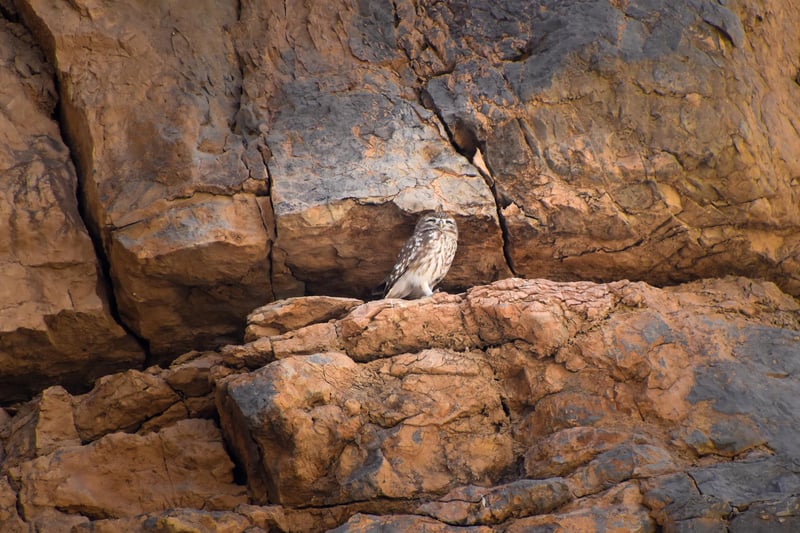
The Little Owl (Athena the owl) is mainly active at dawn and dusk, although it may be seen perched during daylight. It nests in natural cavities in rock faces and old stone structures, often reusing the same sites year after year.
The Desert Lark (Ammomanes deserts) is often seen moving across gravel plains, its changed coloring helping it disappear against the stone. In the UAE, it is a familiar resident of rocky habitats, particularly in the foothills and open mountain slopes where it feeds on insects and seeds close to the ground.
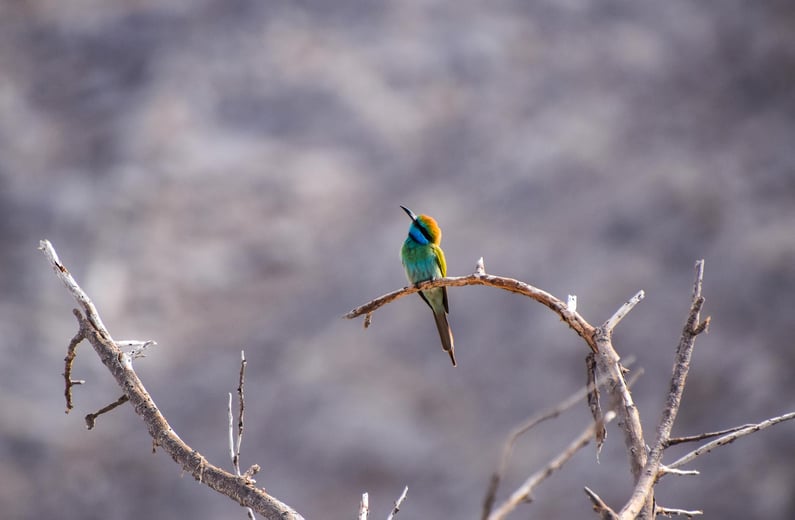
The Arabian Green Bee-eater (Merops cyanophrys) adds flashes of colour to open areas, often perched in the open before darting out to catch insects mid-air, returning repeatedly to the same lookout point.
The Laughing DoveSpilopelia senegalensis) is widespread across Ras Al Khaimah, comfortable in both open desert and near settlements where its soft, rhythmic call is regularly heard.

Higher along rocky slopes, the Chukar (Alectoris chukar) keeps largely to the ground, climbing steep terrain on foot rather than taking flight. Nearby, Hume's Wheatear (Oenanthe albonigra) perches on exposed rocks, watching for insects before making short flights between boulders.
The White-eared Bulbul (Pycnonotus leucotis) is common along the edges of cultivated land near the mountains, often heard before it is seen, feeding on fruit, nectar, and insects in landscaped and semi-natural areas.
Together, these species illustrate how varied the Jebel Jais Mountains birdlife can be across different elevations and habitats.
Reptiles and Desert Adaptation
Reptiles are a frequent presence in the mountain landscape, especially in exposed, sunlit areas and along rocky crevices.
Forskål's Sand Snake (Psammophis schokari) is a fast-moving, non-venomous snake that hunts lizards and small rodents. It is well suited to dry, open ground and can often be found in sandy or rocky areas where cover is limited, relying on speed rather than concealment.

The Ruus Al Jibal Fan-footed Gecko (Ptyodactylus ruusaljibalicus) is endemic to the Hajar Mountains. Its broad toe pads and flattened body allow it to move confidently across steep rock faces, gripping surfaces that appear almost vertical.
The Rock Semaphore Gecko (Rock-cutter) is easy to recognize by its tail-waving displays, a form of communication used to signal to other geckos. It is active during the day, sheltering in small fissures in the rock and feeding on insects.
These reptiles help to regulate the insect populations, playing an important part of the broader predator-prey network within the Jebel Jais ecosystem.
Mountain Flora and Resilience
Plant life in the mountains can appear understated, yet it plays a steady role in supporting the wider ecosystem.
Calotropis procera is easily identifiable by its broad grey-green leaves and waxy flowers. It copes well with heat and poor soil, and like many desert plants, it protects itself with a milky latex that deters grazing animals. It is often one of the first shrubs to take hold in open ground where the soil has been cleared or left bare.
Chrozophora oblongifolia often appears after rainfall in sandy or gravelly ground. Fine hairs on its leaves help reduce water loss, allowing it to survive once conditions dry again.
%20(Large)-1.jpg?width=797&height=531&name=KM%20-%20Jebel%20Jais-6%20(1)%20(Large)-1.jpg)
Euphorbia larica grows along rocky slopes and foothills, its thick stems storing moisture to withstand extended dry periods. It also produces latex as a defence against herbivores, a common adaptation among desert species. Its dense growth can help stabilise looser soil on steeper sections of the mountain.
Together, these plants anchor the landscape and support insect life, which in turn support reptiles, birds, and small mammals across the mountain landscape.
Observing Wildlife Responsibly
The mountain environment functions as more than a destination viewpoint. It is a living habitat shaped by adaptation and balance.
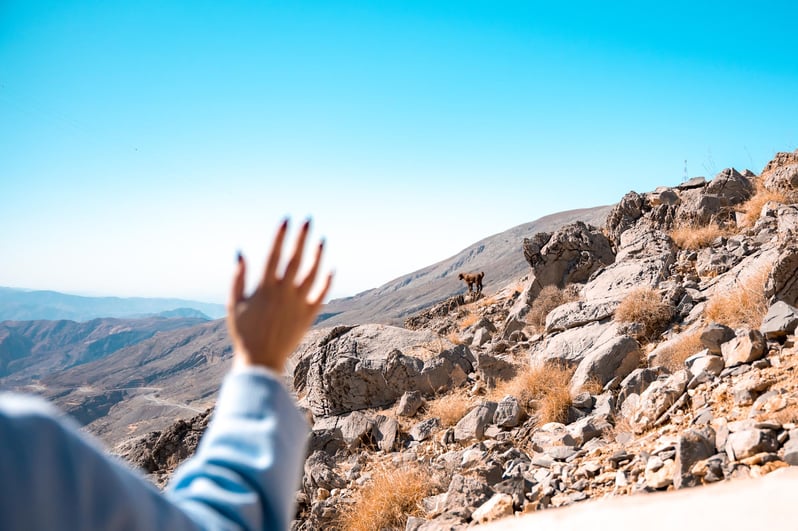
Temporary reductions in traffic have shown how quickly wildlife movement patterns can shift when disturbance decreases. That responsiveness highlights the importance of remaining within designated areas and avoiding unnecessary disruption.
Respect for terrain and habitat helps ensure that animals in Jebel Jais continue to thrive alongside visitor activity.