Jebel Jais rises from the northern edge of Ras Al Khaimah into the Hajar Mountains and is accessible by road year-round. For visitors planning how to get to Jebel Jais, the process is more straightforward than many expect. Clear highways, reliable transport links, and a well-engineered mountain road make the journey from Dubai and across the UAE manageable and enjoyable.
This guide explains the main travel options and what to consider before setting out.
Understanding the Jebel Jais Location
The Jebel Jais, within Ras Al Khaimah's northern mountain range, is close to the Oman border. It is reached via a single primary road that begins outside Ras Al Khaimah city and climbs steadily into the Hajar Mountains.
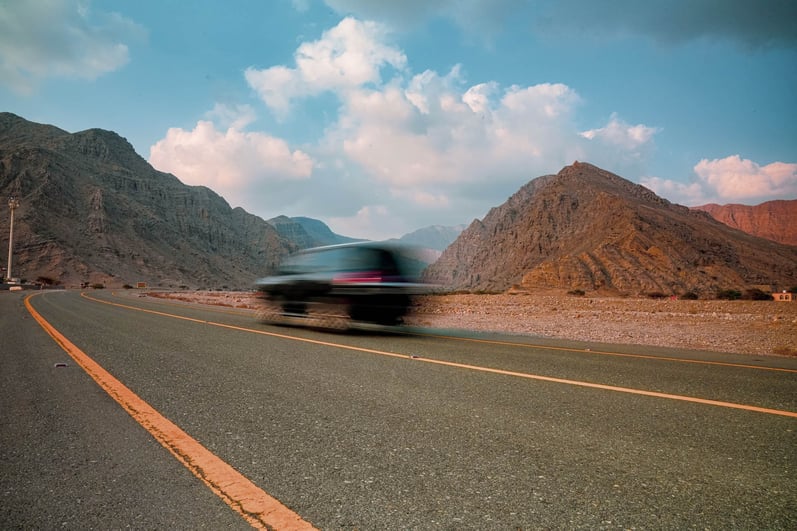
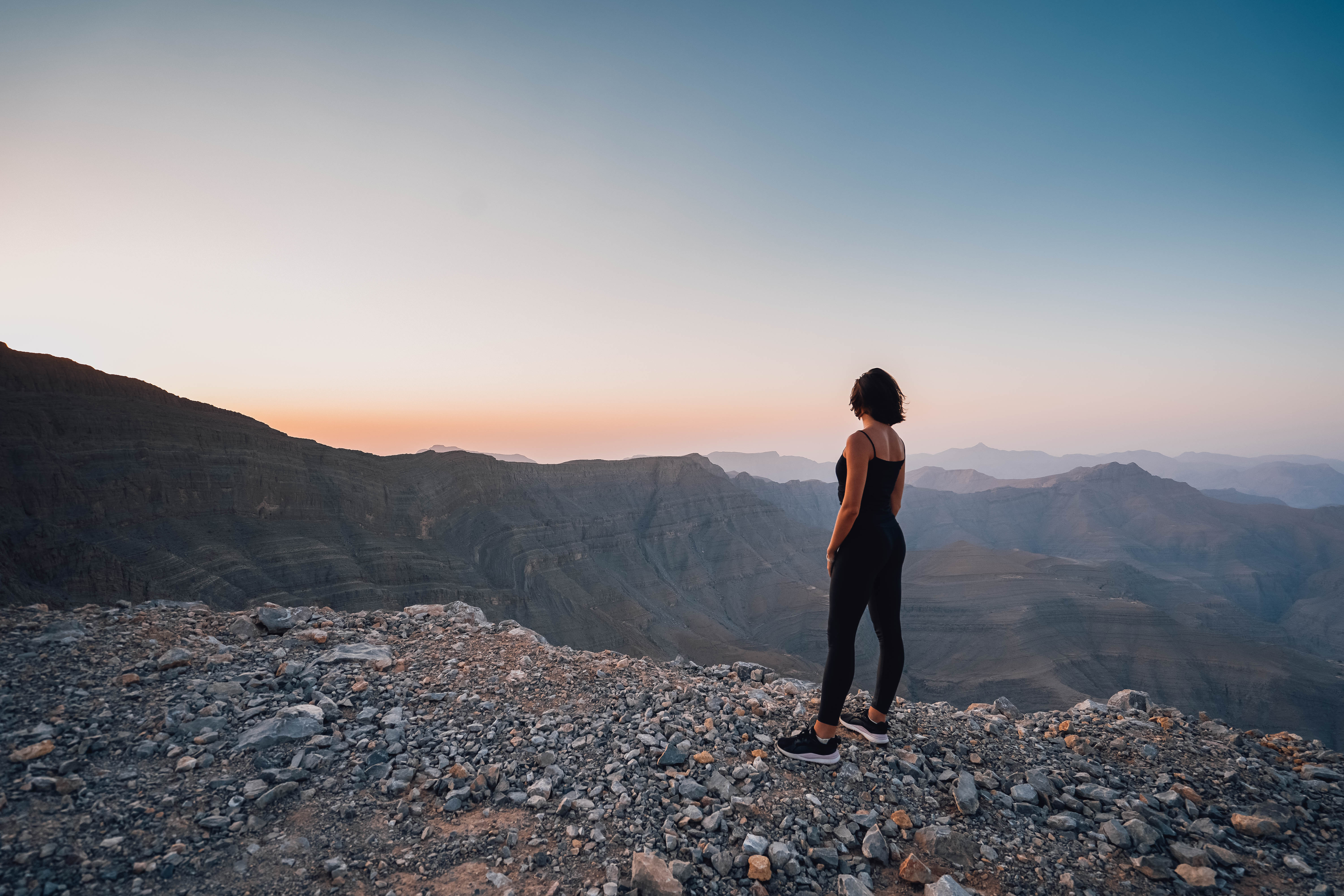
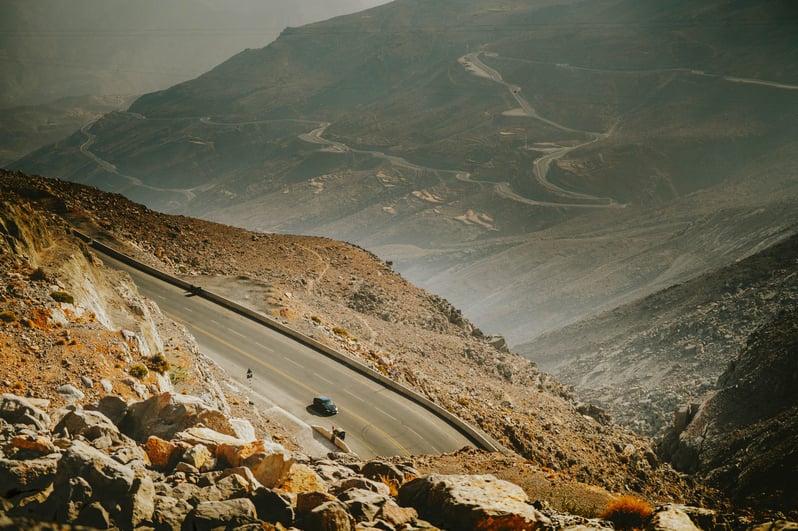
Despite being the highest peak in the UAE, access does not require off-road driving. The mountain road is fully paved, clearly signposted, and maintained to highway standards.
Using a Jebel Jais Map for Route Planning
A digital Jebel Jais map provides clear routing from both Dubai and central Ras Al Khaimah. Navigation platforms typically direct drivers along Sheikh Mohammed Bin Zayed Road (E311) or Emirates Road (E611) towards Ras Al Khaimah, before connecting to the mountain ascent.
Straightforward highway driving gives way to open desert, then foothills, and finally the mountain road. Increased signage as you approach the base of the climb reduces the likelihood of missed turns.
How to Reach Jebel Jais from Dubai
For most visitors, the simplest way to reach Jebel Jais from Dubai is by car. The journey typically takes between 1 hour 45 minutes and 2 hours, depending on your departure point and traffic conditions.
Highway infrastructure between Dubai and Ras Al Khaimah is direct and consistent, and once in Ras Al Khaimah, the mountain road is clearly marked.
Driving from Dubai
Driving will offer you the most flexibility. It allows you to move between viewing areas, activity zones, and rest points without relying on fixed return times. You can also take advantage of the photoworthy spots at your own leisure!
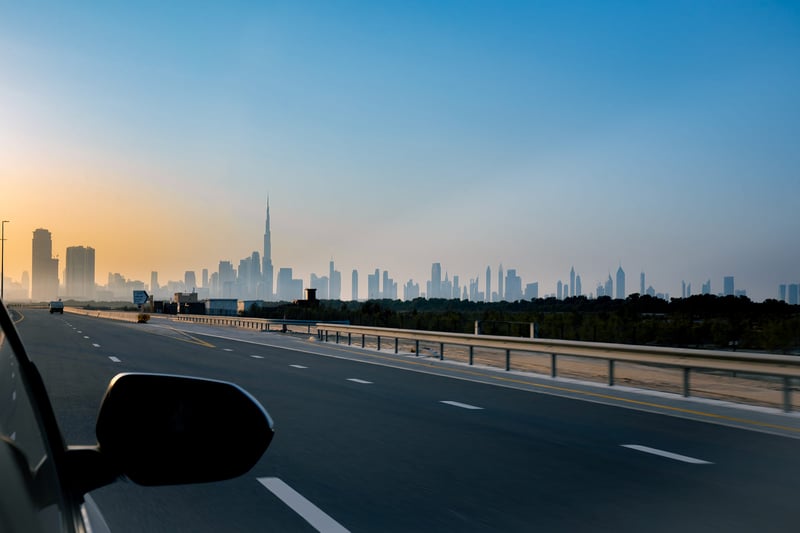
Fuel stations are widely available along the highway and on the outskirts of Ras Al Khaimah. It is recommended to top up your tank before starting the ascent, as there are no fuel stops along the mountain road itself.
Road conditions remain consistent year-round, although visibility can shift during rare fog events in cooler months.
Dubai to Ras Al Khaimah Taxi Fare
For visitors not driving, a taxi remains a practical option. The average Dubai to Ras Al Khaimah taxi fare varies depending on departure location and time of day, however it is generally calculated by meter and can be confirmed in advance with drivers or transport apps.
Taxis are readily available within the emirate, and RAK taxi will be familiar with the mountain route.
Public Transport Options
Public transport requires a two-stage journey, but remains completely manageable. Just relax and let the professionals do the driving, while you enjoy the view along the way.
Ras Al Khaimah Bus from Dubai
The Ras Al Khaimah bus from Dubai connects the two emirates at scheduled intervals. RAK bus timing may vary depending on weekday or weekend schedules, so checking current timetables before departure is recommended.
Buses arrive in Ras Al Khaimah city rather than directly at the mountain.
Ras Al Khaimah to Jebel Jais
From the city centre, taxis provide the most practical onward option for Ras Al Khaimah to Jebel Jais travel. The drive from the city to the mountain base typically takes around 30 to 40 minutes.
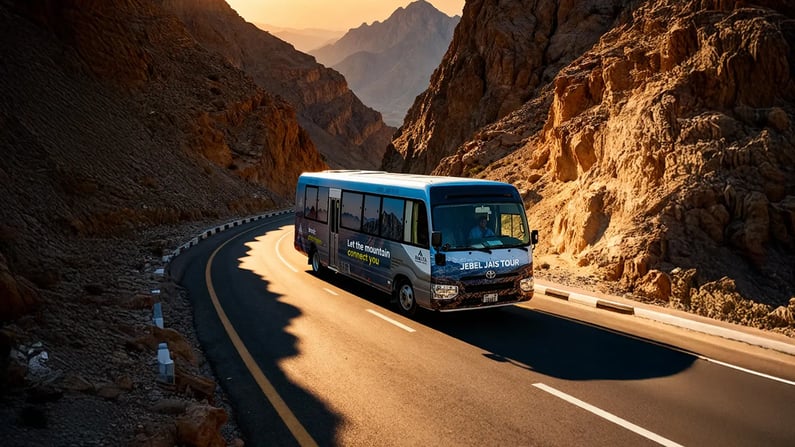
This combination of bus and taxi works well for visitors without private vehicles, particularly on day trips.
Getting to Jebel Jais from within Ras Al Khaimah
If you are already staying in Ras Al Khaimah, reaching Jebel Jais is straightforward. The mountain road begins a short drive north of the city center and is clearly signposted.
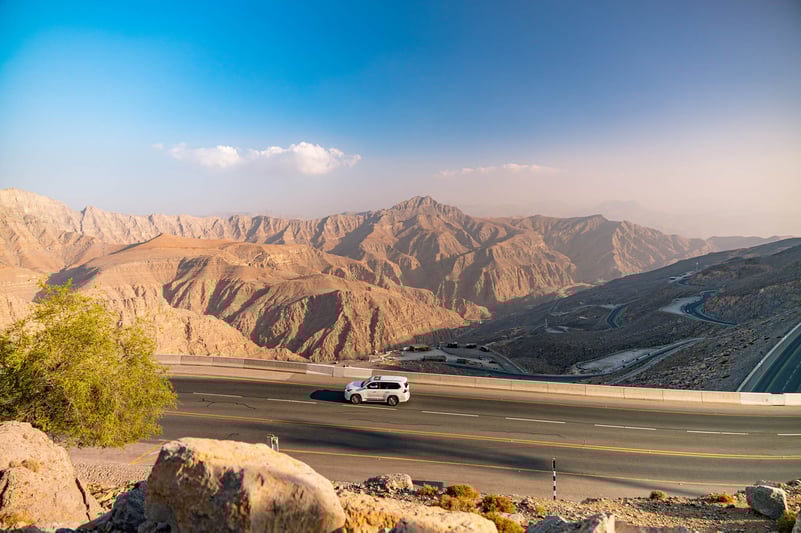
Travel time from most coastal hotels or central accommodation areas ranges between 30 and 45 minutes. Being within an hour of the mountain makes half-day visits or early morning departures a viable option.
What Makes Access Easier Than Expected
While Jebel Jais may appear remote on a map, efficient infrastructure reduces complexity. The ascent road was purpose-built, with engineered gradients, protective barriers, and designated stopping areas.
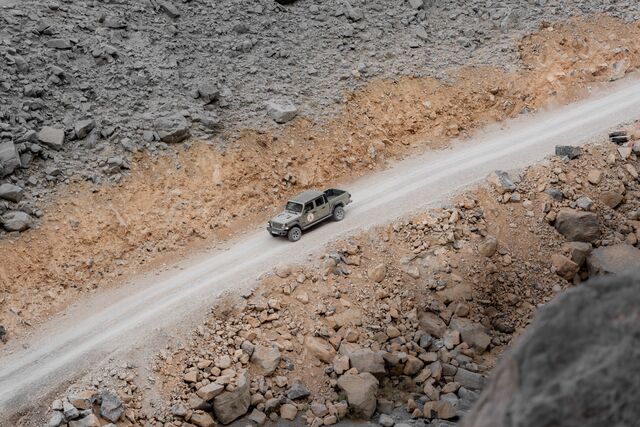
There are parking areas positioned at key points along the route, and navigation signals remain reliable on most sections of the road.
The combination of an easy highway connection and a single, clearly defined mountain corridor means visitors rarely encounter confusion once they begin the climb.
Final Notes:
As previously mentioned, fuel up before beginning the ascent, as there are no refuelling stations along the upper sections.
Weekends during the cooler months can see high visitor counts on the mountain and at its attractions. Arriving earlier in the day ensures you don’t miss out on a parking spot.
Operational hours for attractions and dining facilities may vary whilst observing Ramadan. Check timings online in advance if visiting during that period.
Weather conditions in the mountains can differ slightly from those at sea level in Ras Al Khaimah, particularly in winter. Wind exposure increases the closer you are to the summit.
Reaching Jebel Jais does not require any special vehicles or complex transfers. With clear highways from Dubai, reliable taxi services within and a well-designed mountain road, access is possible year round.
Plan your route carefully and start exploring Jebel Jais as soon as you can!