Nestled in the old town of Ras Al Khaimah, the National Museum of Ras Al Khaimah is much more than a cultural landmark; it’s a journey through Emirati history, a treasure trove of archaeological marvels, and a living testament to traditional coastal heritage. For anyone curious about the roots of the northern emirates, this museum offers an intimate, richly layered experience that is both inspiring and quietly profound.
A Historic Fortress Reborn
The very building that houses the National Museum of Ras Al Khaimah is itself a piece of history. Originally constructed as a fort in the 16th century, it served as the residence of the ruling Al Qawasim (Qasimi) family. Over the years, this fort witnessed conflict and colonial encounters.
.jpg?width=1748&height=1376&name=National%20museum%20of%20ras%20al%20khaimah%20(1).jpg)
In 1987, under the guidance of the government, the fort was restored employing traditional coral-stone construction techniques, and formally opened as the Ras Al Khaimah museum.
This historic structure, with its rectangular tower, inner courtyard, and carved wooden doors, offers an atmospheric setting that invites visitors to step back in time.
A Window into Ancient Civilisations
One of the most compelling reasons to visit the National Museum is its extensive archaeological collection. Ras Al Khaimah is one of the longest continuously inhabited regions in the UAE, with its history stretching back more than 7,000 years.
The museum charts this remarkable timeline through a rich array of artefacts:
- The Neolithic period - Pottery and shell middens discovered near Al Jazirah Al Hamra.
- The Bronze Age - Material from the Umm al-Nar culture, such as beehive-shaped tombs in Shimal. These are believed to be some of the largest funereal structures of their time in southeast Arabia.
- The Iron Age - Highlighted soft-stone vessels unearthed in Wadi al-Qawr, featuring elegant carved motifs.
- Pre-Islamic Sassanian remains - Including seals and coins that underscore Ras Al Khaimah’s historical links to regional powers.
- The Islamic and Julfar era - Ceramics traced to trade routes powered by Ras Al Khaimah’s maritime heritage. Archaeologists have found porcelain from China and Thailand that tells of a once-thriving port city.
Cultural Treasures & Emirati Life
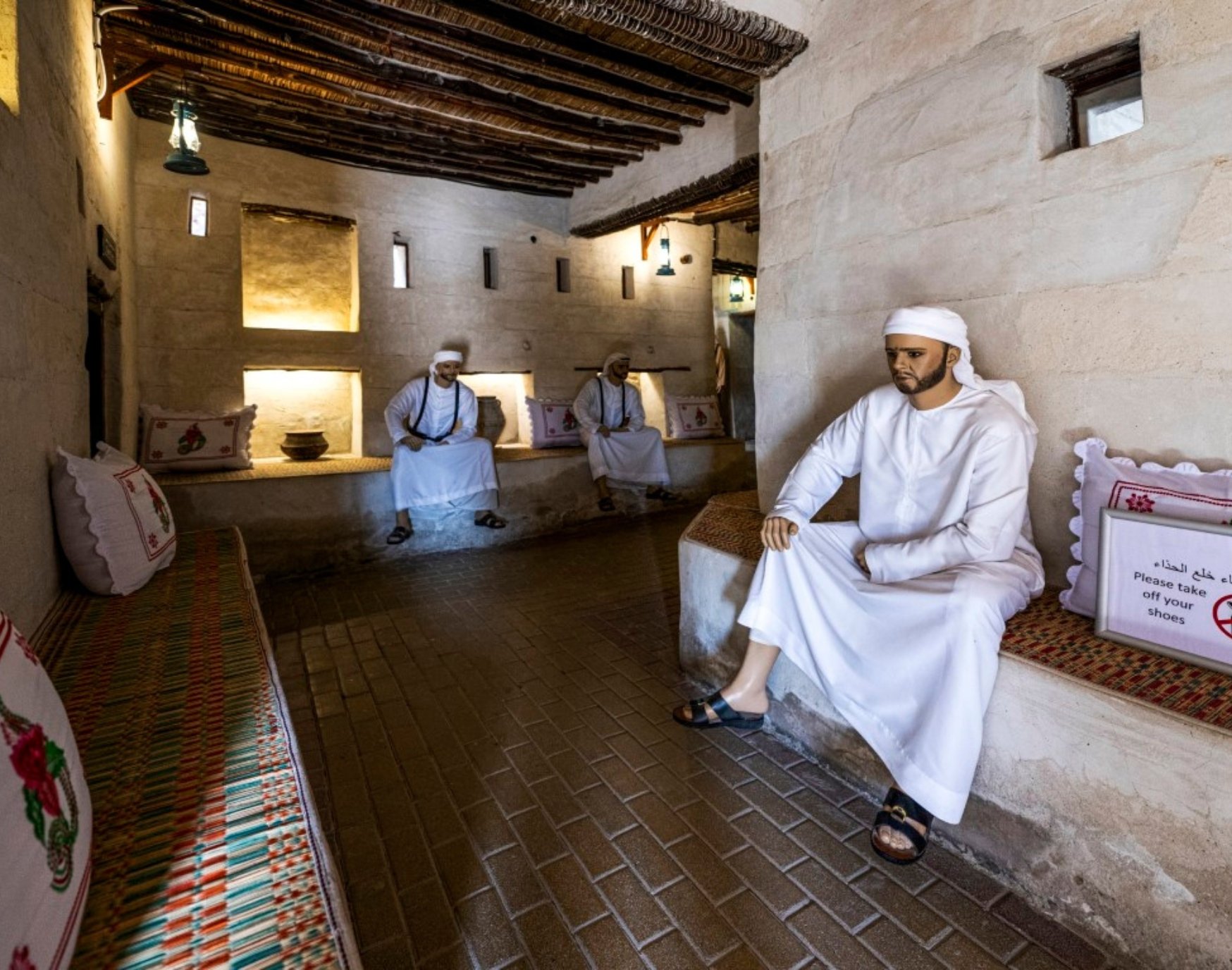
The National Museum of Ras Al Khaimah isn’t just about stone tools and dynastic relics; it also brings Emirati tradition to life through the galleries. As you move through the exhibit rooms, you’ll encounter displays that recreate daily life in the old emirate.
.jpg?width=1748&height=1376&name=National%20museum%20of%20ras%20al%20khaimah%20(3).jpg)
Elsewhere, you’ll find traditional weapons and silver adornments donated by the Quwasim family, along with jewellery, tools, and other artefacts that weave together the story of social life in historical Ras Al Khaimah.
A Story of Diversity & Tolerance
Perhaps one of the most remarkable artefacts in the Ras Al Khaimah museum is a gravestone inscribed in Hebrew, believed to be the only Jewish gravestone found in the UAE. This tiny but powerful object tells a broader story of cultural diversity, coexistence, and the reaching influence of Ras Al Khaimah’s trading past.
There are also coins dating to the 19th century, such as the “Mardhouf Al Quwasim”, minted by the Qawasim family. These tangible objects reflect not just trade and power, but also the layered human relationships that have shaped the Emirati culture.
Why the National Museum of Ras Al Khaimah Is Worth Visiting
Archaeological Significance
With artefacts that include ancient vessels, seals, burial items, coins, and ceramics, the museum provides a rare window into pre-Islamic and early Islamic trade, culture, and civilisation.
Living Traditions
The ethnographic galleries make heritage tangible: you can learn about pearl-diving rituals, date agriculture, traditional architecture, and tribal life. All are central to Emirati identity.
Educational Value
Whether you’re passionate about archaeology, cultural heritage, or traditional architecture, the museum provides thoughtfully curated galleries that educate without overwhelming. Ideal for both families and solo explorers.
Intimate Experience
Unlike larger, glossier national museums, the Ras Al Khaimah museum is peaceful and accessible.
Plan your Visit to the National Museum of Ras Al Khaimah
Opening Times:
Tuesday–Thursday and Saturday–Sunday from 8 am–6 pm.
Fridays from 2 pm–8 pm.
Location: It’s located in the heart of Ras Al Khaimah’s old town, close to the Mohammed bin Salim Mosque.
Experience: Start with the main hall to learn about the fort’s history, then move into the courtyard to explore the archaeology and ethnography galleries.
Final Thoughts
Taking a journey through this incredible landmark will give you a rich appreciation for Ras Al Khaimah’s unique journey. The National Museum is a must-visit for anyone wanting to understand the depth, diversity, and enduring spirit of this remarkable part of the United Arab Emirates. Do give it a visit!



%20(Large).jpg?width=352&name=Highlander%202021%20(1)%20(Large).jpg)